
Department of Transport and Planning: Advancing Gender Equity in Transport

The transport sector has long been one of Australia's most male-dominated industries, with women making up just 28% of its workforce. The Victorian Department of Transport and Planning set out to change that, launching the Women in Transport Strategy 2021–24 with an ambitious target of 50% female representation, including in senior roles, by the end of 2024. The strategy needed programs that could drive real change.
Structural barriers and deeply embedded workplace cultures do not shift through programs alone. The harder challenge was designing initiatives that reached people where they actually were, responded to their lived experiences and built genuine career pathways. In a sector with historically low representation of women, the design had to be strong enough to move the needle against significant inertia, and robust enough to demonstrate real career outcomes rather than just engagement statistics.
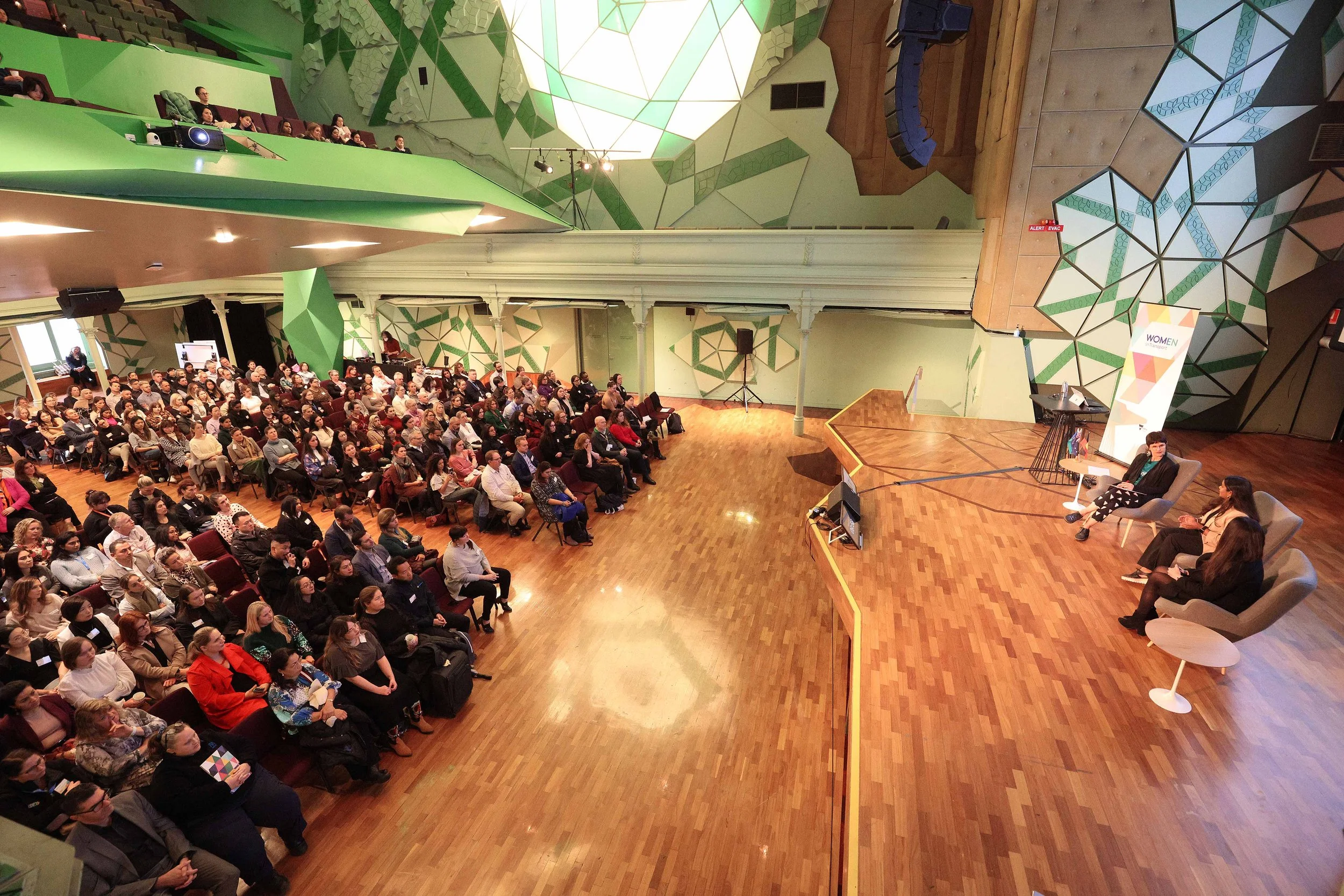
I led two flagship initiatives under the strategy. For the Women in Transport Mentoring Program, I redesigned the participant experience to centre individual goals and voices, moving away from a one-size-fits-all model towards something that recognised what each participant was actually trying to achieve. I facilitated large-scale professional development and networking events for up to 600 participants, brought in high-profile guest speakers to strengthen visibility and engagement, and designed a monitoring and evaluation framework to capture outcomes and inform continuous improvement.
For the Leadership Development Scholarships, I conducted in-depth interviews with past and current participants to understand their lived experiences and the barriers they faced. I used those insights to redesign operational systems, making them more intuitive and genuinely supportive rather than administratively burdensome. I also introduced wraparound mentoring, networking and professional development support to provide continuity during study.
Together, these programs delivered measurable impact: mentoring engagement increased by 235%, and 95% of scholarship participants reported career progression as a direct result. Emerging women leaders gained visibility across the sector, and talent pipelines were strengthened with a view to lasting beyond the life of the strategy itself.
If you're working in a sector with historically uneven representation and you're designing programs that need to do more than look good on paper, I'd be glad to talk through what purposeful design looks like in practice.
I led this work in my role at the Level Crossing Removal Project and Department of Transport and Planning, before founding Impact Practice. The inclusive employment program design and evaluation thinking behind it shapes the work I do with clients today.
Image: HiVis Pictures courtesy of LXRP